
Self-Directed IRA Structure and IRS Framework
Quick Summary / Key Takeaways
- A self-directed IRA is an individual retirement account established under Internal Revenue Code §408 that permits a broader range of asset types than many traditional brokerage IRAs, subject to federal tax law restrictions.
- Permitted investments may include certain real estate interests, private placements, and specific precious metals, provided they are not prohibited under Internal Revenue Code §408 or §4975.
- Investment gains within a Traditional IRA are generally tax-deferred. In a Roth IRA, qualified distributions may be tax-free, subject to applicable holding period requirements and income limitations under federal tax law.
- A qualified IRA custodian holds and titles IRA assets, maintains required records, and issues IRS reporting forms, including Form 5498 and Form 1099-R where relevant, in accordance with Internal Revenue Code §408, or works with a self-directed IRA administrator, like IRA Club.
- The account holder directs investment decisions. Neither the qualified IRA custodian nor IRA Club evaluates their investment’s merits, nor do they provide tax, legal, or investment advice.
A self-directed IRA operates under the same contribution limits and distribution rules that apply to other IRAs under Internal Revenue Code §408. For 2026, the IRA contribution limit is $7,500, with an additional $1,100 catch-up contribution for individuals age 50 or older, as provided in IRS Notice 2025-67.
Introduction

A self-directed IRA is an individual retirement account established under Internal Revenue Code §408 that permits a broader range of asset types than many standard brokerage IRAs, subject to federal tax law restrictions.
Unlike IRAs limited to publicly traded securities, a self-directed IRA may hold certain alternative assets, including real estate interests, private placements, and specific precious metals, provided the investments are not prohibited under Internal Revenue Code §408 or §4975. All investments must comply with applicable federal tax rules governing prohibited transactions and disqualified persons.
A self-directed IRA follows the same contribution limits, income rules, and distribution requirements that apply to other IRAs under Internal Revenue Code §408. For 2026, the IRA contribution limit is $7,500, with an additional $1,100 catch-up contribution for individuals age 50 or older, as provided in IRS Notice 2025-67. Traditional IRAs generally provide tax-deferred growth. Roth IRAs may provide tax-free qualified distributions if statutory requirements are satisfied.
The account holder directs all investment decisions. A qualified IRA custodian holds and titles IRA assets, maintains required records, and issues applicable IRS reporting forms, including Form 5498 and Form 1099-R where relevant, in accordance with Internal Revenue Code §408, or works with a self-directed IRA administrator, like IRA Club. The custodian does not evaluate their investment’s merits or provide tax, legal, or investment advice.
Diversification across asset classes is permitted only to the extent the investments comply with federal tax law and the custodian’s published service scope. Investment results depend on the performance of the underlying assets and are not guaranteed.
A qualified IRA custodian holds and titles IRA assets, maintains required records, and issues applicable IRS reporting forms in accordance with Internal Revenue Code §408, or works with a self-directed IRA administrator, like IRA Club.
Traditional IRA vs. Self-Directed IRA: Structural Comparison Under Internal Revenue Code §408
| Feature | Traditional IRA (Brokerage-Based) | Self-Directed IRA |
|---|---|---|
| Permitted Investments | Typically limited to publicly traded securities such as stocks, bonds, and mutual funds, subject to the financial institution’s platform and internal policies | May include alternative assets such as real estate interests, private placements, and certain precious metals to name a few, subject to Internal Revenue Code §408 and §4975, and the qualified IRA custodian’s published service scope |
| Investment Direction | Account holder selects from the financial institution’s available investment offerings | Account holder directs all investment decisions, including alternative assets permitted under federal tax law |
| Custodian Function | Qualified IRA custodian holds and titles assets, maintains required records, and issues applicable IRS reporting forms, including Form 5498 and Form 1099-R where relevant | Qualified IRA custodian holds and titles assets, maintains required records, and issues applicable IRS reporting forms; processes the account holder’s written investment directions |
| Tax Treatment | Tax treatment governed by Internal Revenue Code §408 (Traditional IRAs generally provide tax-deferred growth; Roth IRAs may provide tax-free qualified distributions if statutory requirements are met) | Same tax treatment governed by Internal Revenue Code §408; the self-directed structure does not change contribution limits, income rules, or distribution requirements |
| Contribution Limits (2026) | $7,500 annual limit; $1,100 catch-up for individuals age 50 or older, per IRS Notice 2025-67 | $7,500 annual limit; $1,100 catch-up for individuals age 50 or older, per IRS Notice 2025-67 |
Both Traditional brokerage IRAs and self-directed IRAs operate under the same federal tax framework set forth in Internal Revenue Code §408. The primary structural difference relates to the range of assets permitted by the qualified IRA custodian’s platform and internal policies.
Alternative Asset Categories Within a Self-Directed IRA Under Internal Revenue Code §408
| Asset Category | Example Investment Type | Tax Treatment Within an IRA | Structural Considerations Under Federal Tax Law |
|---|---|---|---|
| Real Estate | Residential rental property held by the IRA | Income and gains are generally tax-deferred in a Traditional IRA; qualified distributions from a Roth IRA may be tax-free if statutory requirements are met | Asset must be titled in the name of the IRA by a qualified IRA custodian and comply with Internal Revenue Code §408 and §4975 |
| Private Equity | Private company membership or partnership interests | Earnings are generally tax-deferred in a Traditional IRA; Roth IRA tax treatment is subject to federal rules | Investment documentation is processed by the qualified IRA custodian; prohibited transaction rules under Internal Revenue Code §4975 apply |
| Private Lending | Promissory notes or secured loans made by the IRA | Interest income is generally tax-deferred in a Traditional IRA; Roth IRA tax treatment is subject to federal rules | Loan structure must comply with Internal Revenue Code §4975; the qualified IRA custodian holds and records the note in the name of the IRA |
| Precious Metals | Certain gold bullion meeting statutory requirements | Gains are generally tax-deferred in a Traditional IRA; Roth IRA tax treatment is subject to federal rules | Metals must meet fineness standards under Internal Revenue Code §408(m) and be held by the qualified IRA custodian or an approved depository |
Tax treatment for all asset categories is governed by Internal Revenue Code §408 and does not vary based on asset type. Investment results depend on the performance of the underlying asset and are not guaranteed.
A qualified IRA custodian holds and titles IRA assets, maintains required records, and issues applicable IRS reporting forms, including Form 5498 and Form 1099-R where relevant, in accordance with Internal Revenue Code §408. The custodian does not provide tax, legal, or investment advice.
Self-Directed IRA Account Setup and Funding Procedures Under Internal Revenue Code §408
- Select a qualified IRA custodian, or a self-directed IRA administrator, like IRA Club, whose published service scope includes the intended asset types under Internal Revenue Code §408 and §4975.
- Complete the account application and required custodial disclosure documents.
- Fund the account through a direct transfer or eligible rollover in accordance with Internal Revenue Code §408.
- Identify a prospective investment and submit transaction documentation to the qualified IRA custodian for processing in accordance with its written procedures.
Ongoing Recordkeeping and Reporting Considerations
- Review periodic account statements issued by the qualified IRA custodian for accuracy of asset listings and reported fair market values.
- Confirm that all asset titles are held in the name of the IRA by the qualified IRA custodian or self-directed IRA administrator.
- Document investment-related expenses paid directly from IRA funds in accordance with applicable custodial procedures.
- Provide required valuation information to the qualified IRA custodian to support annual IRS reporting on Form 5498.
A qualified IRA custodian holds and titles IRA assets, maintains required records, and issues applicable IRS reporting forms, including Form 5498 and Form 1099-R where relevant, in accordance with Internal Revenue Code §408, or works with a self-directed IRA administrator, like IRA Club. The custodian does not determine eligibility, monitor compliance with prohibited transaction rules, or provide tax, legal, or investment advice.
Table of Contents

Section 1: CORE ADVANTAGES
Section 2: ASSET OPPORTUNITIES
Section 3: FINANCIAL STRATEGY
Frequently Asked Questions
Section 1: CORE ADVANTAGES
FAQ 1: What structural characteristics distinguish a self-directed IRA under Internal Revenue Code §408?
A self-directed IRA is an individual retirement account established under Internal Revenue Code §408 that permits a broader range of asset types than many brokerage-based IRAs, subject to federal tax law restrictions. The tax treatment of the account remains the same as other IRAs under Internal Revenue Code §408.
Depending on the qualified IRA custodian’s published service scope, permitted investments may include certain real estate interests, private placements, promissory notes, and specific precious metals that are not prohibited under Internal Revenue Code §408 or §4975. All investments must comply with federal rules governing prohibited transactions and disqualified persons.
The account holder directs all investment decisions. A qualified IRA custodian holds and titles IRA assets, maintains required records, and issues applicable IRS reporting forms, including Form 5498 and Form 1099-R where relevant, or works with a self-directed IRA administrator, like IRA Club. The custodian does not approve investments or evaluate their economic merits.
A self-directed IRA follows the same contribution and distribution framework as other IRAs under Internal Revenue Code §408. For 2026, the annual IRA contribution limit is $7,500, with an additional $1,100 catch-up contribution permitted for individuals age 50 or older, as provided in IRS Notice 2025-67.
FAQ 2: How can asset diversification operate within a self-directed IRA under Internal Revenue Code §408?
A self-directed IRA established under Internal Revenue Code §408 may permit a broader range of asset types than many brokerage-based IRAs, depending on the qualified IRA custodian’s published service scope. Permitted assets may include certain real estate interests, private placements, promissory notes, and specific precious metals that are not prohibited under Internal Revenue Code §408 or §4975.
Because different asset classes may respond differently to economic conditions, holding multiple asset types within an IRA may result in varied performance outcomes. All investments must comply with federal tax rules governing prohibited transactions and disqualified persons.
The account holder directs all investment decisions. A qualified IRA custodian holds and titles IRA assets, maintains required records, and issues applicable IRS reporting forms, including Form 5498 and Form 1099-R where relevant, or works with a self-directed IRA administrator, like IRA Club. The custodian does not approve investments or evaluate their economic merits.
FAQ 3: How does investment direction function within a self-directed IRA under Internal Revenue Code §408?
In a self-directed IRA established under Internal Revenue Code §408, the account holder directs all investment decisions, subject to federal tax law and the qualified IRA custodian’s published service scope. This structure differs from certain brokerage-based IRAs, where investment options may be limited to the financial institution’s platform offerings.
The account holder is responsible for identifying investment opportunities and submitting written investment instructions to the qualified IRA custodian for processing. All transactions must comply with Internal Revenue Code §408 and §4975, including rules governing prohibited transactions and disqualified persons.
A qualified IRA custodian holds and titles IRA assets, maintains required records, and issues applicable IRS reporting forms, including Form 5498 and Form 1099-R where relevant, or works with a self-directed IRA administrator, like IRA Club. The custodian does not evaluate the investment’s economic merits or provide tax, legal, or investment advice.
Section 2: ASSET OPPORTUNITIES
FAQ 4: Can a self-directed IRA hold real estate under Internal Revenue Code §408?
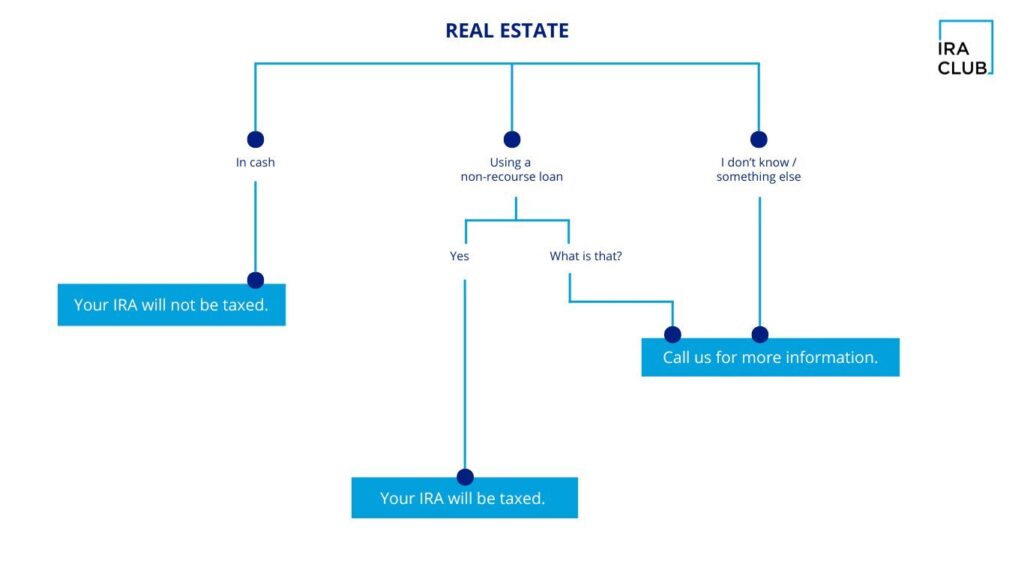
A self-directed IRA established under Internal Revenue Code §408 may hold certain real estate interests, depending on the qualified IRA custodian’s published service scope. Permitted property types may include residential rental property, commercial real estate, or undeveloped land, provided the investment is not prohibited under Internal Revenue Code §408 or §4975.
When real estate is acquired within an IRA, the property must be titled in the name of the IRA and held by the qualified IRA custodian or self-directed administrator for the benefit of the account. Income generated by the property generally flows back into the IRA. In a Traditional IRA, earnings are generally tax-deferred. In a Roth IRA, qualified distributions may be tax-free if statutory requirements are satisfied under Internal Revenue Code §408.
Real estate held in an IRA is subject to federal rules governing prohibited transactions and disqualified persons under Internal Revenue Code §4975. The account holder and certain related parties may not use the property for personal benefit.
A qualified IRA custodian holds and titles IRA assets, maintains required records, and issues applicable IRS reporting forms, including Form 5498 and Form 1099-R where relevant, in accordance with Internal Revenue Code §408, or works with a self-directed IRA administrator, like IRA Club. The custodian does not evaluate the investment’s economic merits or provide tax, legal, or investment advice.
FAQ 5: How can precious metals be held within a self-directed IRA under Internal Revenue Code §408?
A self-directed IRA established under Internal Revenue Code §408 may hold certain precious metals, provided they meet the statutory requirements under Internal Revenue Code §408(m) and are not prohibited under Internal Revenue Code §4975. Eligibility depends on the qualified IRA custodian’s published service scope and applicable federal tax rules.
Permissible metals generally include specific gold, silver, platinum, and palladium coins or bullion that satisfy required fineness standards under Internal Revenue Code §408(m). The metals must be titled in the name of the IRA and held by the qualified IRA custodian, self-directed administrator or an approved depository in accordance with custodial procedures.
As with other IRA assets, income and gains within a Traditional IRA are generally tax-deferred. In a Roth IRA, qualified distributions may be tax-free if statutory requirements are satisfied under Internal Revenue Code §408. Tax treatment is governed by federal law and does not vary based solely on asset category.
A qualified IRA custodian holds and titles IRA assets, maintains required records, and issues applicable IRS reporting forms, including Form 5498 and Form 1099-R where relevant, in accordance with Internal Revenue Code §408 or works with a self-directed IRA administrator, like IRA Club. The custodian does not evaluate the investment’s economic merits or provide tax, legal, or investment advice.
FAQ 6: Can a self-directed IRA invest in private companies under Internal Revenue Code §408?
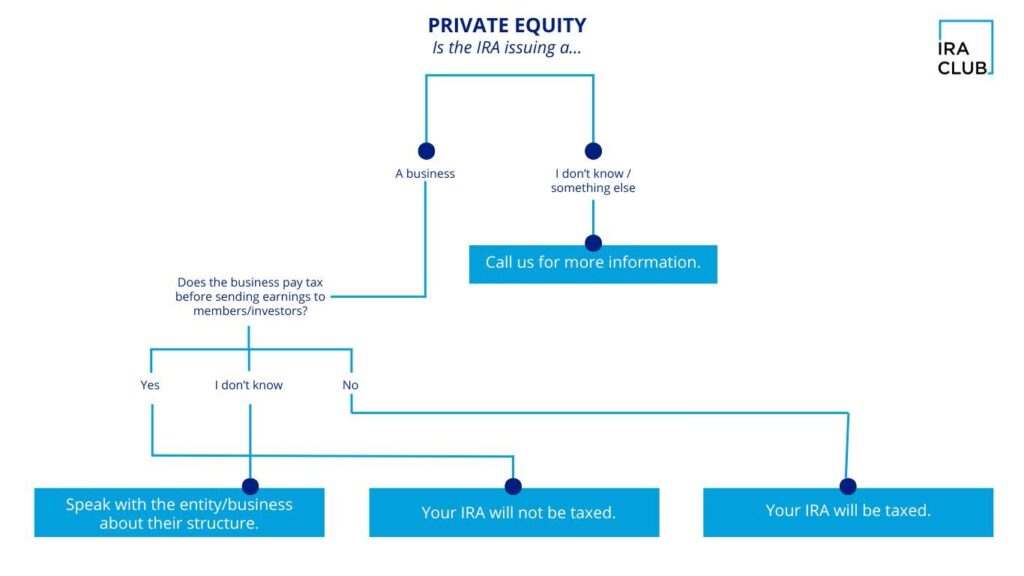
A self-directed IRA established under Internal Revenue Code §408 may hold certain private company interests, including startup equity, depending on the qualified IRA custodian’s published service scope. The investment must not be prohibited under Internal Revenue Code §408 or §4975.
When an IRA acquires an ownership interest in a private company, the asset must be titled in the name of the IRA and held by the qualified IRA custodian or self-directed IRA administrator for the account’s benefit. Any income, distributions, or sale proceeds generally flow back into the IRA in accordance with custodial procedures.
As with other IRA assets, earnings within a Traditional IRA are generally tax-deferred. In a Roth IRA, qualified distributions may be tax-free if statutory requirements are satisfied under Internal Revenue Code §408. Tax treatment depends on the type of IRA and applicable federal tax rules.
Investments in private companies are subject to federal rules governing prohibited transactions and disqualified persons under Internal Revenue Code §4975. The account holder and certain related parties may not engage in transactions that result in personal benefit.
A qualified IRA custodian holds and titles IRA assets, maintains required records, and issues applicable IRS reporting forms, including Form 5498 and Form 1099-R where relevant, in accordance with Internal Revenue Code §408 or works with a self-directed IRA administrator, like IRA Club. The custodian does not evaluate the investment’s economic merits or provide tax, legal, or investment advice.
FAQ 7: Can a self-directed IRA engage in private lending under Internal Revenue Code §408?
A self-directed IRA established under Internal Revenue Code §408 may originate certain loans to third parties, depending on the qualified IRA custodian’s published service scope. These transactions are typically structured as promissory notes and may be secured or unsecured.
When an IRA issues a loan, the promissory note must be titled in the name of the IRA and held by the qualified IRA custodian or administrator for the account’s benefit. Principal and interest payments are generally deposited back into the IRA in accordance with custodial procedures.
Earnings within a Traditional IRA are generally tax-deferred. In a Roth IRA, qualified distributions may be tax-free if statutory requirements are satisfied under Internal Revenue Code §408. Tax treatment depends on the type of IRA and applicable federal tax rules.
Loans made by an IRA are subject to federal rules governing prohibited transactions and disqualified persons under Internal Revenue Code §4975. The borrower may not be a disqualified person, and the transaction must not result in personal benefit to the account holder or related parties.
A qualified IRA custodian holds and titles IRA assets, maintains required records, and issues applicable IRS reporting forms, including Form 5498 and Form 1099-R where relevant, in accordance with Internal Revenue Code §408 or works with a self-directed IRA administrator, like IRA Club. The custodian does not evaluate the investment’s economic merits or provide tax, legal, or investment advice.
Section 3: FINANCIAL STRATEGY
FAQ 8: How is tax treatment applied to private placements held within a self-directed IRA under Internal Revenue Code §408?
A self-directed IRA established under Internal Revenue Code §408 may hold certain private placement investments, depending on the qualified IRA custodian’s published service scope. Tax treatment is determined by the type of IRA and applicable federal tax law.
In a Traditional IRA, earnings and gains are generally tax-deferred while assets remain within the account. In a Roth IRA, qualified distributions may be tax-free if statutory requirements under Internal Revenue Code §408 are satisfied. Tax treatment does not change based solely on whether the asset is publicly traded or privately held.
When a private placement is acquired by an IRA, the ownership interest must be titled in the name of the IRA and held by the qualified IRA custodian or administrator for the account’s benefit. Any income, distributions, or sale proceeds generally flow back into the IRA in accordance with custodial procedures.
Private placements are subject to federal rules governing prohibited transactions and disqualified persons under Internal Revenue Code §4975. Transactions must not result in direct or indirect personal benefit to the account holder or related parties.
A qualified IRA custodian holds and titles IRA assets, maintains required records, and issues applicable IRS reporting forms, including Form 5498 and Form 1099-R where relevant, in accordance with Internal Revenue Code §408 or works with a self-directed IRA administrator, like IRA Club. The custodian does not evaluate the investment’s economic merits or provide tax, legal, or investment advice.