
Non-Recourse Lenders for Self-Directed IRA Real Estate
A non-recourse loan may allow a Self-Directed IRA to borrow against real estate when the IRA lacks sufficient cash to purchase the property outright. This resource provides a reference list of IRA non-recourse lenders and explains key loan, documentation, and tax considerations.
A non-recourse loan for IRA real estate means the IRA itself is the borrower. The account holder is not personally liable for repaying the loan.
The loan is made to the IRA and secured by the property. Under the loan terms, the lender’s recourse is limited to the collateral property.
Why does an IRA need a non-recourse loan?
Your IRA needs a non-recourse loan because your IRA is an entity, not a person, and cannot personally make a guarantee that the loan will be paid off. Even as the IRA account holder, you cannot guarantee any loan your IRA takes when purchasing investments like real estate because you, the account holder, are considered a disqualified person to your IRA in accordance with IRS Code IRC 4975 (c)(1)(B). A non-recourse loan is a strategy some investors use when their IRAs don’t have enough funds to purchase an investment property on their own.
Benefits
- A Self-Directed IRA may use borrowed funds to acquire real estate, subject to IRS rules, lender terms, custodian procedures, and account documentation.
- If a default occurs, the lender’s recourse is generally limited to the pledged collateral rather than the account holder’s personal assets, subject to the loan documents.
Drawbacks
- Higher interest rates for loans compared to traditional loans due to higher risk to the lender, as well as a larger down payment requirement.
- Limited lender options for non-recourse financing due.
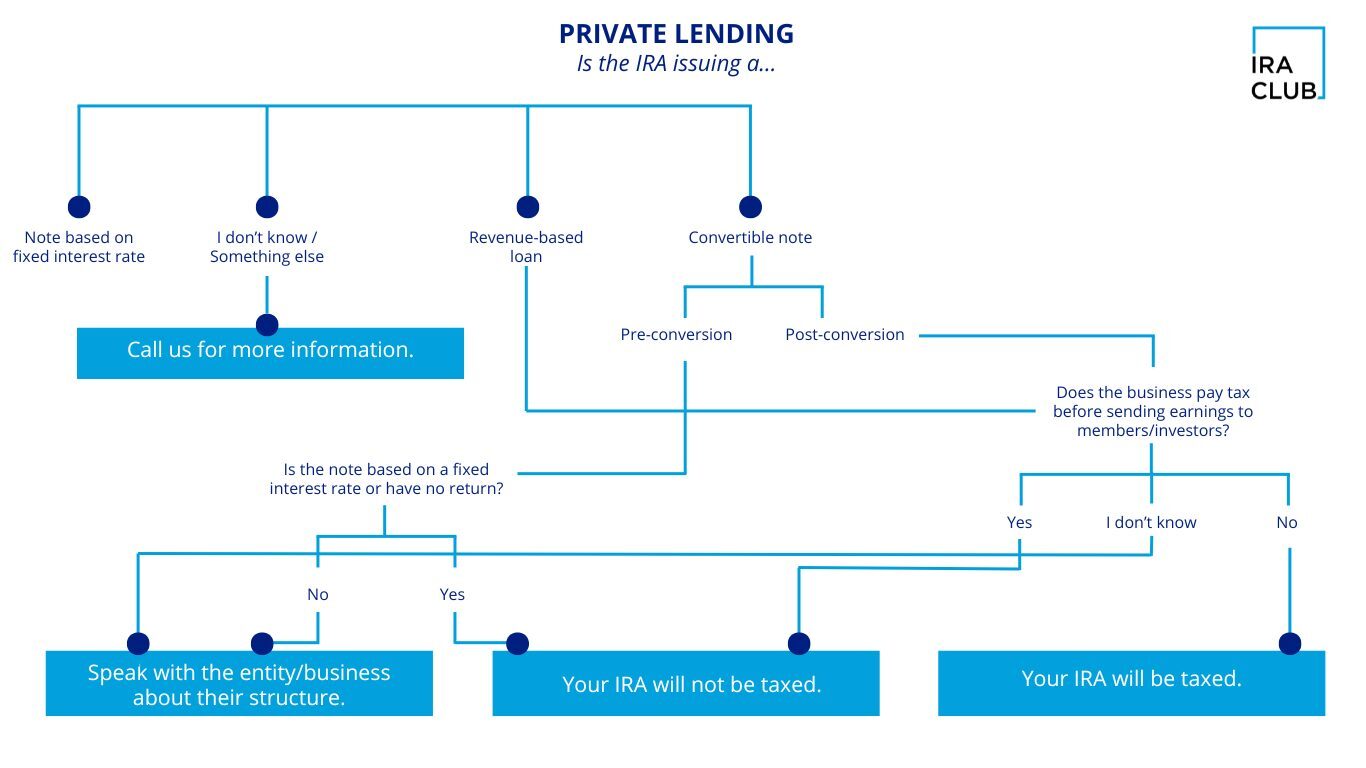
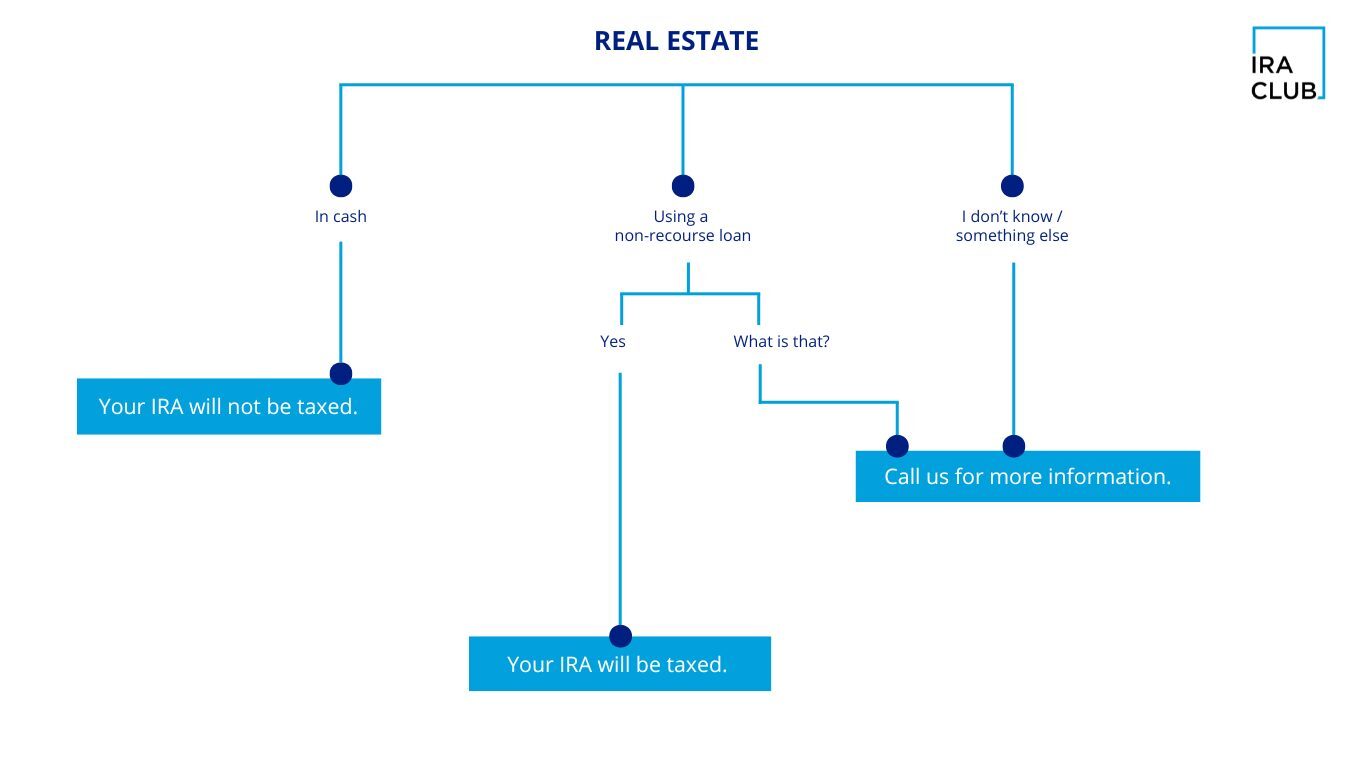
- Non-recourse loans trigger UBIT from Unrelated Debt-Financed Income (UDFI) on the income generated from the debt-leveraged investment.
- Non-recourse loan availability may vary by state, property type, and lender program. Confirm availability and loan requirements directly with the lender before proceeding.
The Process For Securing an Investment with a Non-Recourse Loan

Open and Fund a Self-Directed IRA
To get started, open your SDIRA and fund the account with a contribution, a transfer from an existing IRA, rollover from a 401(k) or all three.

Find Your Investment
Find your investment by networking at local events or browsing through Investor’s Row. A self-directed IRA allows you to invest in a wide variety of alternative asset classes.

Your IRA Secures a Non-Recourse Loan
Find a lender that specializes in non-recourse loans. Be prepared to provide property details as well as have the IRA put down a larger down payment to secure the loan.

Closing on the Investment
Send over the documentation to IRA Club and complete any additional details needed to fund the investment. IRA Club will work with your lender and handle the closing on behalf of your SDIRA.

Managing the Investment
Your IRA secured the investment. The income received to the IRA will help pay down the loan and when all debt is settled, your IRA will own the investment full and clear.
Unrelated Debt-Financed Income (UDFI) — Know This Before You Borrow
When a Self-Directed IRA uses a non-recourse loan to acquire income-producing real estate, a portion of the income or gain from the debt-financed property may be treated as unrelated debt-financed income (UDFI). UDFI may be included in unrelated business taxable income (UBTI) and may result in unrelated business income tax (UBIT), depending on the transaction and applicable tax rules. (Internal Revenue Code §512 and §514)
UDFI treatment may depend on factors such as acquisition indebtedness, adjusted basis, and income from the property. For additional educational information, see [UBIT/UDFI resource page].
Non-Recourse Lenders
The organizations below are listed as reference contacts for IRA non-recourse lending. Loan availability, underwriting standards, property eligibility, state availability, rates, down payments, and other terms may change. IRA Club does not determine whether a lender, loan, or investment is appropriate or eligible. IRA Club does not evaluate lender underwriting criteria or loan terms, determine investment eligibility, or provide tax, legal, or investment advice.
| Name | Website | Phone Number |
|---|---|---|
| First Western Federal | Visit Site |
605-341-1203 |
| LoanBidz | Visit Site |
417-605-2196 |
| North American Savings Bank | Visit Site |
855-211-3340 |
| Red Rock Capital | Visit Site |
719-900-5400 |
| Peak Asset Lending | Visit Site |
913-956-7325 |
| Fortis Bank | Visit Site |
720-616-4000 |
IRA Club does not endorse, recommend, or receive commissions, fees, or other compensation from the lenders listed below. This list is provided for reference only. Lender availability, IRA non-recourse loan programs, and transaction terms may change. Confirm directly with each lender whether it currently offers IRA non-recourse loans and whether its terms apply to the proposed property and transaction. Last reviewed: [Month Year].
For information about Self-Directed IRA or Solo 401(k) account setup, administrative support, and educational resources, contact IRA Club at 312-795-0988.
Non-Recourse Loan Terms and Lender Questions
Non-recourse loan terms and underwriting requirements may vary by lender, property type, state, and transaction structure. The following questions may help clarify a lender’s program requirements:
- What interest rate, fees, closing costs, and other loan terms apply?
- What loan-to-value (LTV) ratio does the lender use for the proposed property?
- How does the lender evaluate projected property income and expenses for underwriting purposes?
- How are defaults, collateral recovery, and other loan remedies addressed in the loan documents?
- What minimum down payment or equity contribution does the lender require?
- Does the lender offer IRA non-recourse loans for the proposed property type and state?

Frequently Asked Questions
The reference list above identifies organizations that may offer IRA non-recourse lending. Each lender can confirm whether it currently offers IRA non-recourse loans and whether its programs apply to the proposed property, state, and transaction. IRA Club does not endorse or recommend any lender and does not determine investment eligibility or provide tax, legal, or investment advice.
Many IRA non-recourse lenders require a down payment of 30–40%, with loan-to-value (LTV) ratios typically in the 60–70% range. These ranges may be higher than those for some conventional investment-property loans because the lender’s recovery may be limited to the collateral under the loan documents. Loan requirements vary by lender, property type, state, and transaction.
It may. When an IRA uses debt financing to acquire income-producing property, a portion of the income or gain from the debt-financed property may be treated as unrelated debt-financed income (UDFI). UDFI may be included in unrelated business taxable income (UBTI) and may be subject to unrelated business income tax (UBIT), depending on the transaction and applicable tax rules.
For additional educational information, see [UBIT/UDFI resource page]. Tax treatment depends on the specific transaction and applicable tax rules.
An IRA may co-invest in a property with another investor, entity, or IRA. Each participant holds a documented proportional ownership interest, and income, expenses, and sale proceeds are generally allocated according to that ownership interest.
All transactions must correspond to the percentage shared. When transactions don’t have a clear separation or don’t match up with the percentage shared between the partners, especially for disqualified persons, it may create prohibited-transaction concerns under Internal Revenue Code §4975. Co-ownership structures may be used when an IRA does not have sufficient cash to acquire a property without borrowing.
If an IRA defaults on a non-recourse loan, the lender’s remedies are generally limited to the collateral securing the loan, such as the property. The lender may exercise its rights under the loan documents, including foreclosure on the collateral.
The account holder is not personally liable, and the lender’s recourse does not extend to other IRA assets, subject to the loan documents and any applicable legal exceptions. Non-recourse financing is generally used for IRA real estate because a personal guarantee by the account holder may create prohibited-transaction concerns under Internal Revenue Code §4975.
Lender programs may support property types such as single-family rentals, multifamily properties, and certain commercial real estate. The IRA’s ability to acquire a property depends on applicable IRS rules, lender terms, custodian procedures, and transaction documentation.
Availability varies by lender, state, and property type. Each lender can confirm whether its IRA non-recourse loan program applies to the proposed property and location.
IRA Club does not provide financial, tax, legal, or investment advice and does not endorse products, investments, or companies. Readers may conduct appropriate due diligence and consult qualified professionals regarding their specific circumstances before entering an investment transaction. Due diligence may help identify material transaction risks, including potential fraud.

Unrelated Debt Finance Income (UDFI)
When utilizing a non-recourse loan, keep in mind that your IRA is subject to UDFI tax for the net income generated from the debt-leveraged amount on the property.
IRA Club does not offer investment, tax, financial, or legal advice, nor do we endorse any products, investments, or companies that provide such advice. All parties are strongly encouraged to perform due diligence and consult with the appropriate professionals licensed in that area before entering into any investment agreement or purchase. Performing due diligence helps protect against fraud.