
Most retirement investors are used to thinking of an IRA as a place for stocks, mutual funds, and exchange-traded funds. A self-directed IRA private equity investment may allow retirement account assets to be allocated to private businesses, startup offerings, and non-public investment funds, if the asset type is supported under the account documents, custodian procedures, and applicable IRS rules.
This guide explains how private equity in a self-directed IRA works, what IRS rules apply, and how documentation, ownership, valuation, and prohibited transaction rules are generally handled.
What Counts as Private Equity in a Self-Directed IRA?
In general, IRA private equity refers to acquiring an ownership interest in a company that is not publicly traded on a stock exchange. That ownership can take several forms depending on the offering. A self-directed IRA may hold stock in a private C corporation, membership interests in a private LLC, partnership interests, venture capital fund interests, angel investment interests, or private placement securities under Regulation D or Regulation A+, if the investment is supported by the qualified IRA custodian’s administrative procedures and follows applicable IRS rules.
Private equity ownership inside a self-directed IRA must be titled to the IRA, not to the IRA owner personally.
Examples may include IRA ownership of units in a private company offering or a minority ownership interest in a private LLC, if the issuer permits retirement account ownership and the transaction follows applicable account and IRS rules. In both cases, the asset is held inside the IRA rather than in a personal taxable account.
Not every private company investment is automatically allowed, however. S-corporation stock is specifically prohibited as an IRA holding, and some issuers may only accept accredited investors or qualified purchasers. Before funds are moved, the security type, offering terms, account titling, and qualified IRA custodian administrative requirements generally need to be reviewed for retirement account ownership.
How Ownership Is Structured in a Self-Directed IRA Private Equity Investment
In a self-directed IRA private equity investment, the IRA owns the investment, not the account holder personally. Even though the IRA owner directs the investment instructions, all legal ownership is generally recorded in the name of the IRA through the qualified IRA custodian. A typical title may reference the qualified IRA custodian for the benefit of the IRA account holder’s IRA, based on the custodian’s required titling format.
That titling generally needs to appear consistently across subscription agreements, share purchase documents, operating agreements, and issuer records. If the paperwork lists the account holder’s personal name instead of the IRA, the investment may not be properly structured as an IRA asset. Private equity self-directed IRA transactions are document-heavy, so titling errors can create administrative and reporting issues later.
The money flow follows the same rule. Funds are sent directly from the IRA to the private issuer, and all returns generally must come back to the IRA. Those returns may include dividend payments, partnership distributions, liquidation proceeds, or sale proceeds if the company is acquired.
There are also clear lines the investor cannot cross. The IRA owner generally cannot personally guarantee debt tied to the investment, use personal cash to complete part of the subscription, pledge IRA assets as collateral, or engage in transactions involving disqualified persons under Internal Revenue Code §4975. Keeping the retirement account separate from personal funds and personal obligations supports proper IRA administration and compliance with prohibited transaction rules.
Prohibited Transactions and Disqualified Persons
For any private equity IRA investment, prohibited transaction rules are a key compliance checkpoint. Internal Revenue Code §4975 restricts transactions that create a personal benefit for the IRA owner or certain related parties, known as disqualified persons.
Disqualified persons generally include the IRA owner, the IRA owner’s spouse, parents, grandparents, children, grandchildren, their spouses, and anyone serving in a fiduciary role over the IRA. That means an IRA generally cannot invest in a business that the IRA owner already owns, manages, or controls in a way that creates a prohibited transaction under Internal Revenue Code §4975. For example, an IRA generally cannot be used to purchase ownership interests from the IRA owner or another disqualified person.
The same principle applies to compensation and indirect benefit. The IRA owner generally cannot draw a salary from the IRA-owned company, personally borrow against the IRA-held shares, or route company income into a personal account. A prohibited transaction can cause the IRS to treat the entire IRA as distributed, which may trigger immediate income taxes and applicable additional taxes.
Investment due diligence and legal, tax, and investment review remain the investor’s responsibility with qualified professionals, as needed.
Liquidity and Valuation Considerations for Private Company Investments Held in an IRA
Private equity investments may provide access to non-public companies, but they are often illiquid. Many startup placements, venture funds, and private company deals may have multi-year holding periods, with little or no ability to redeem early. Unlike publicly traded shares, there may be no active market where the IRA can sell the asset when liquidity is needed.
That long holding period creates a second responsibility: annual valuation. Even without a daily share price, the qualified IRA custodian generally needs fair market value information for the asset each year it remains in the account for reporting purposes. Depending on the issuer and the structure, that valuation may come from a third-party appraisal, a 409A startup valuation, audited financial statements, or sponsor-provided company financials.
Learn more from our guide on FMV FAQs
This annual reporting is not just a paperwork exercise. The IRA’s fair market value affects year-end account statements and becomes especially important when required minimum distributions apply. For IRA private equity investments, illiquidity and recurring valuation requirements are part of the account administration process.
UBIT Considerations for Private Equity Investments
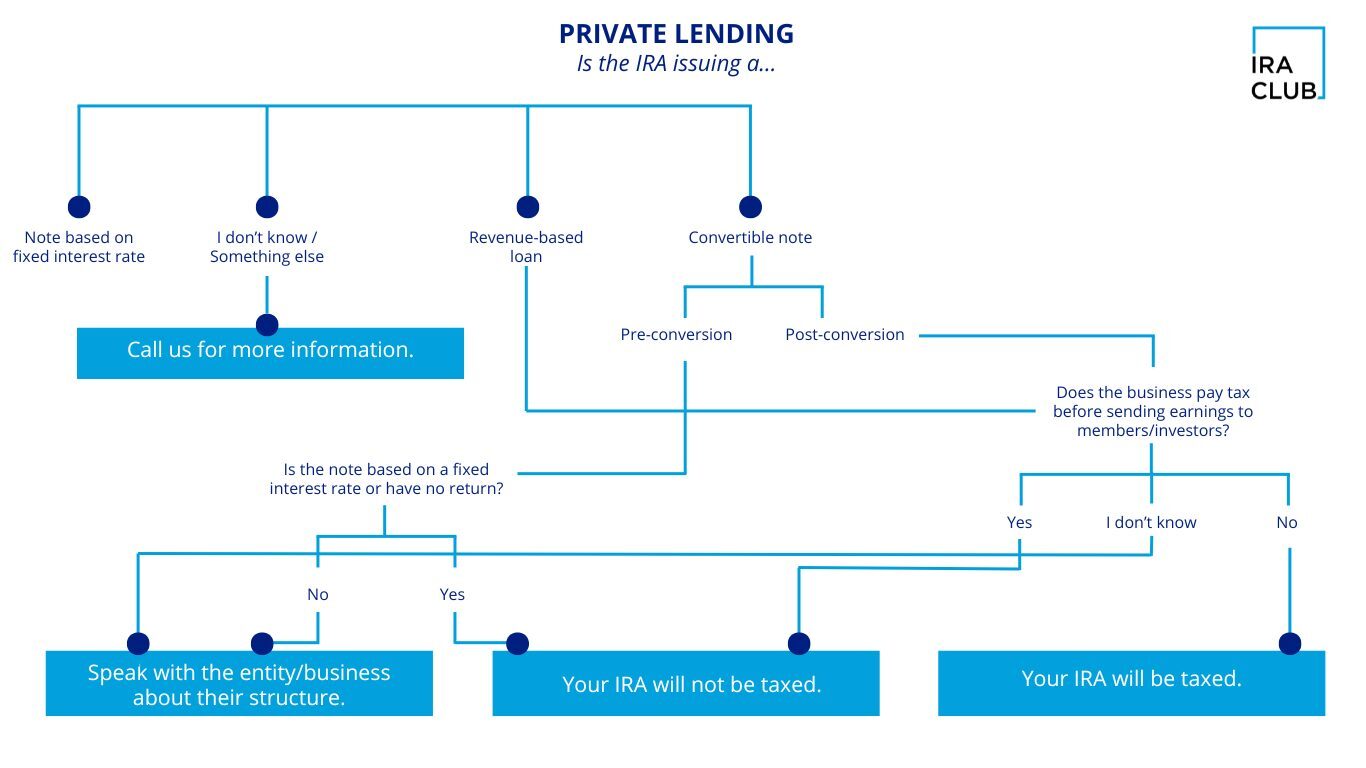
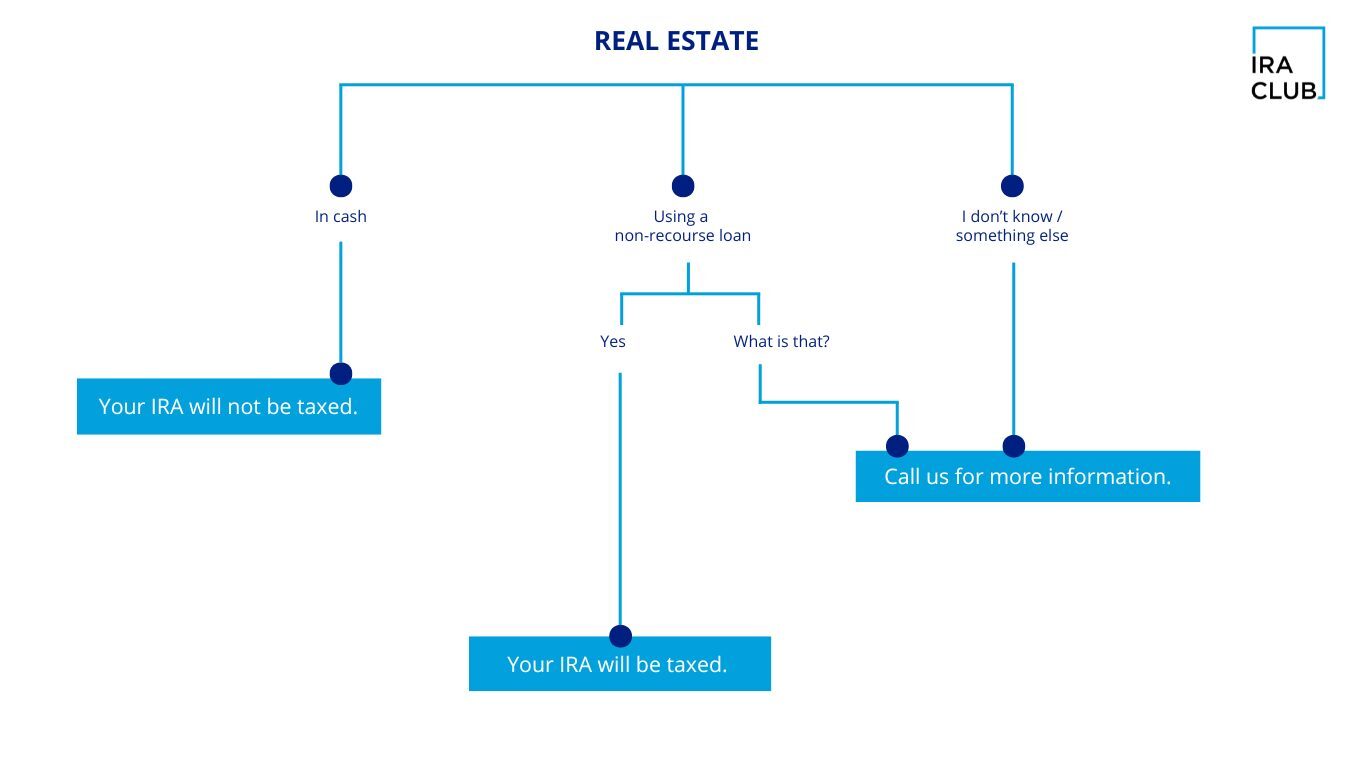
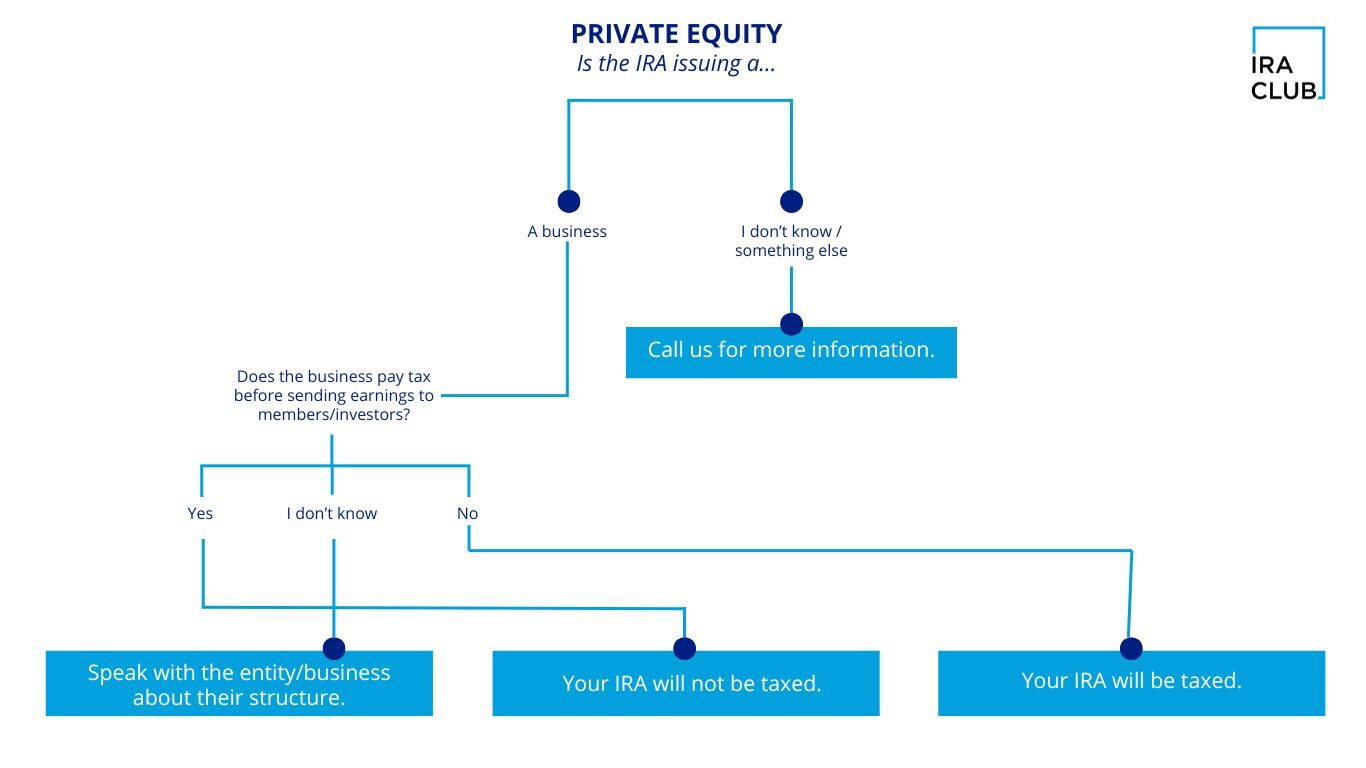
One area that requires attention is that tax-deferred IRA treatment does not mean every type of income is free from current tax. Some private equity structures in a self-directed IRA can generate unrelated business taxable income, or UBTI, which may be subject to Unrelated Business Income Tax, commonly called UBIT, depending on how the underlying entity earns money.
A common trigger is pass-through operating income from LLCs and partnerships. If an IRA buys an ownership interest of an active operating LLC, the IRA may be allocated a portion of that company’s business income, and that share may be taxable under UBIT rules. This is different from passive investment income.
By contrast, dividends from private C-corporation stock are generally considered passive income and are less likely to create the same UBIT exposure. That is why entity type matters before funding a deal. The ownership structure, issuer documents, and potential UBIT treatment generally need tax review before retirement account assets are committed to an operating company.
Each situation is different, and if you feel your self-directed investment might incur UBIT, it’s important to reach out to a CPA who understands self-directed IRAs and UBIT.
How to Make a Private Equity Investment With IRA Club
The process generally begins by opening a self-directed IRA account and funding it through one of three common methods: an annual contribution, a transfer from another IRA, or a rollover from an eligible retirement plan. Once the account is funded, the investor identifies the private deal and completes due diligence on the issuer, sponsor, financials, and subscription terms.
Get started with your IRA
After that, investment direction and supporting documentation are submitted to the IRA Club for administrative review. This review focuses on account titling, funding instructions, and apparent prohibited transaction concerns, not on whether the private company is likely to succeed. That distinction matters because the investor remains in control of the investment decision.
Once documentation is administratively reviewed and accepted for processing, IRA funds are directed from the IRA to the issuer through the applicable custodian process, and the ownership records are established in the name of the IRA. During the life of the investment, annual valuation updates are submitted, and any distributions or sale proceeds flow back into the retirement account. If the transaction remains within applicable IRA rules, the income or proceeds generally remain inside the IRA unless distributed, subject to applicable IRS rules and tax treatment.
Frequently Asked Questions
Can an IRA invest in private equity?
Yes, a self-directed IRA may hold private equity, including startup shares, private placement offerings, venture funds, and ownership interests in private LLCs or partnerships, if the asset is supported by the qualified IRA custodian’s administrative procedures and follows applicable IRS rules. This is one of the main differences between a brokerage IRA, typically focused on publicly traded assets, and a self-directed IRA structure that can support certain alternative assets.
Some offerings may also require accredited investor status, depending on the issuer.
How does ownership work when an IRA invests in a private company?
When investing in private companies with IRA funds, the IRA itself is the legal owner of the asset, not the IRA owner personally. The subscription documents, stock certificates, or membership agreements generally need to be titled in the name of the IRA through the qualified IRA custodian or self-directed administrator, using the custodian’s required titling format, and IRA-related funds generally move between the IRA and the issuer through the applicable custodian process.
What is a prohibited transaction in the context of private equity?
A prohibited transaction may occur when the IRA investment involves a direct or indirect personal benefit for the IRA owner or another disqualified person under Internal Revenue Code §4975. For example, an IRA generally cannot buy ownership in a company the IRA owner already controls, and the IRA owner generally cannot personally guarantee debt tied to the investment. Violations may cause the IRA to be treated as distributed for tax purposes.
IRA Club does free prohibited transaction analysis of all investments going through IRA Club members’ accounts.
Does private equity in an IRA trigger UBIT?
Sometimes. A private equity investment held through an LLC or partnership may create unrelated business taxable income, or UBTI, which may be subject to Unrelated Business Income Tax, or UBIT, if the IRA receives allocable operating business income. C-corporation dividends are generally passive and are generally less likely to create UBTI under the same analysis, depending on the facts and structure of the investment.
It’s important to reach out to a CPA who understands both self-directed IRAs and UBIT to navigate a potential UBIT situation.
How Is Private Equity Valued Inside a Self-Directed IRA?
Private equity held in a self-directed IRA generally requires annual fair market value reporting even without a public share price. That value may be supported by a third-party appraisal, a 409A valuation, audited financial statements, or company financial reports provided by the issuer, depending on the asset, issuer, and qualified IRA custodian requirements.
Private Equity in a Self-Directed IRA: Administrative and Compliance Considerations
Private equity in a self-directed IRA generally involves ownership documentation, prohibited transaction considerations, annual valuation reporting, and possible UBIT considerations before IRA funds are directed to an issuer.