Estate Broker or Agent
Unlock Billions in Capital
Unlock billions in capital by helping your clients invest in real estate with their retirement savings. Did you know Americans have more than $11 trillion saved in their individual retirement accounts? However, less than 4% of retirement funds are invested in alternative assets such as real estate. Nearly 97% of Americans invest their IRAs in ETFs, stocks, bonds, and mutual funds.

Here is the harsh truth: investments in the 97% may be underachieving. Your client may not even know that diversifying his or her retirement portfolio is an option. As a real estate professional, how would you like to be your client’s hero? How would you like to give your client the option to buy with retirement dollars and close your deal?
Banks have tightened their lending practices. Self-Directed IRAs are a great source to raise capital. Smart real estate professionals understand the advantages of Self-Directed retirement plans. In fact, real estate is the most common investment type amongst Self-Directed IRA account owners.
Don’t Miss This Underutilized Opportunity
Self-Directed IRA investing is a hidden gem. Above all, mastering the opportunities of Self-Directed IRAs can assist you in:

Investment Sponsor Application
Complete the application prior to referring investors. Our team will use the information you provide to understand the nature of the investment and determine the administrative process.


Start Investing with Your IRA Today
Personalized service from a designated IRA specialist. Contact us to learn more!
IRA Club may terminate the membership to the program if your Account is inactive in any continuous twelve-month period as defined in the program requirements. IRA Club may terminate the membership immediately if; a) the applicant fails to pass the ongoing checks performed by IRA Club) the applicant becomes insolvent, becomes the subject of a bankruptcy or receivership proceeding, makes an assignment for the benefit of creditors, has a substantial portion of its assets seized or attached, or is no longer authorized to conduct business; c) the applicant is (or will be) merged into or is (or will be) acquired by another entity that IRA Club determines, in good faith, is not financially sound or lacks the experience, ability or capacity to perform the obligations required by this program. IRA Club reserves the right to make changes to its B2B program at any time. IRA Club also reserves the right to make changes to the products and services offered at any time. (ie. Type of accounts offered, fees, marketing, etc.). Upon any termination of this agreement, the applicant will immediately return to IRA Club, or at IRA Club’s request destroy, all copies of IRA Club confidential information in its possession or control or will certify to IRA Club in writing that it has destroyed all such confidential information.
Real Estate Broker IRA Partnership FAQ
Real estate brokers and investors often explore how retirement accounts may participate in real estate partnerships. Under federal rules, a Self-Directed IRA (SDIRA) can invest in certain real estate ventures when the asset type can be held by a qualified IRA custodian or administrator and the investment complies with Internal Revenue Code §408 and §4975. In this structure, the SDIRA—not the individual broker or investor—owns the investment interest, and all transactions must meet IRS requirements for custody, documentation, valuation, and prohibited transactions.
A Self-Directed IRA may hold various real estate-related assets that a custodian or administrator can support. These can include residential rentals, commercial properties, land, and passive interests in real estate partnerships or syndications. For IRS compliance, the account owner cannot use the property personally, and all property expenses—such as taxes, insurance, and maintenance—must be paid from the IRA. All income, including rental payments or sale proceeds, must return to the IRA. Any work on the property must be performed by third parties to avoid prohibited transactions involving disqualified persons.
Because real estate ventures are generally private and may involve complex ownership structures, an SDIRA requires proper titling in the IRA’s name, independent valuation, and ongoing custodial oversight. A qualified IRA custodian or administrator holds legal title to the SDIRA’s interest and manages IRS reporting, including Forms 5498 and 1099-R.
Understanding these operational and compliance requirements helps real estate brokers, investors, and partnership sponsors evaluate whether SDIRA assets may participate in a real estate offering. By clarifying custodial duties, administrative roles, and IRS regulations, this guide provides a framework for assessing how SDIRAs may interact with real estate partnership structures within an IRS-regulated retirement account.
A Self-Directed IRA (SDIRA) is an individual retirement account—typically a Traditional or Roth IRA—that operates under the same federal tax rules as other IRAs, including contribution limits, income phase-outs, and distribution requirements. The key difference is that, when supported by a qualified IRA custodian, an SDIRA may hold certain real estate assets. Permissible real estate can include residential rentals, commercial property, land, or passive interests in real estate partnerships, provided the investment complies with Internal Revenue Code §408 and §4975 and the custodian’s asset policies.
In an SDIRA, the account—not the individual—holds legal title to the real estate. All income, such as rental payments, and all expenses, including taxes, insurance, repairs, and management costs, must flow directly through the IRA. Neither the account owner nor other disqualified persons may personally use the property or provide labor or services. Any work must be performed by independent third parties. SDIRA-held real estate also requires proper documentation, ongoing recordkeeping, and independent valuation.
A qualified IRA custodian or administrator manages asset custody, proper titling, recordkeeping, and required IRS reporting, including Forms 5498 and 1099-R.
Takeaway:
A Self-Directed IRA may hold certain real estate assets when supported by a qualified custodian and compliant with IRS rules. Understanding custodial duties, administrative roles, and prohibited transaction requirements is essential when evaluating whether real estate fits into an IRS-regulated retirement strategy.
A real estate broker cannot receive commissions from transactions involving their own Self-Directed IRA (SDIRA). Under Internal Revenue Code §408 and §4975, the account owner is considered a “disqualified person.” Compensation connected to an IRA-owned property—including commissions, fees, or other financial benefits tied to the IRA’s investment—may be treated as a prohibited transaction.
In an SDIRA structure, the account must remain a passive investor. This means the broker cannot provide paid services to the IRA or to any entity in which the IRA holds an interest. Engaging in compensation-based activities may cause the IRA to lose its tax-advantaged status for the year in which the prohibited transaction occurred, subject to IRS rules.
Takeaway:
A real estate broker cannot earn commissions from SDIRA-related real estate transactions. Keeping the IRA passive and avoiding compensated involvement helps individuals understand how their activities relate to IRS prohibited transaction rules.
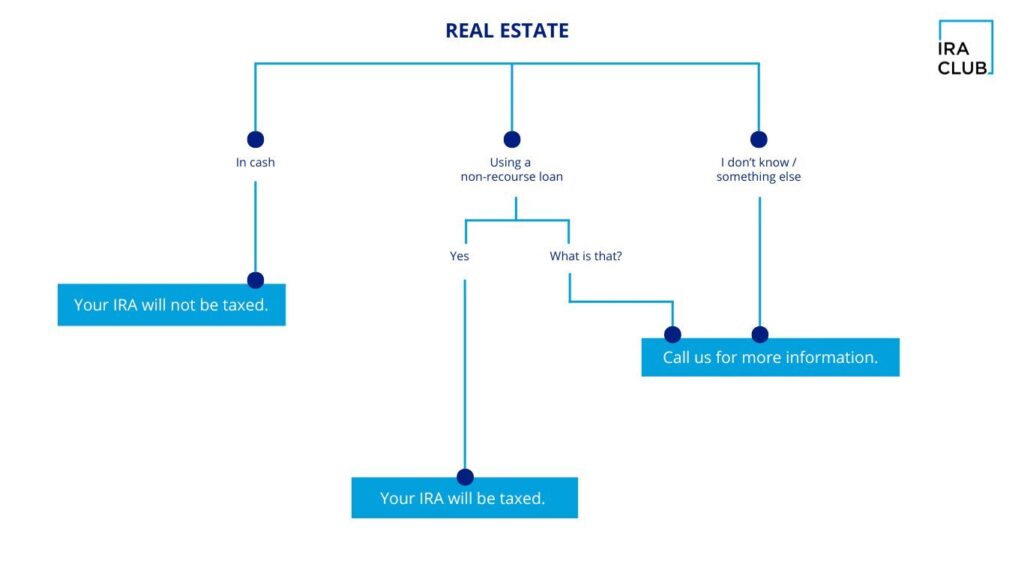
A Self-Directed IRA (SDIRA) can hold real estate in two primary ways under IRS rules:
- Direct Ownership: In this structure, the SDIRA holds legal title to the property. All income and expenses must move through the IRA, and all activity must comply with Internal Revenue Code §408 and §4975, including rules on disqualified persons, prohibited transactions, and proper valuation. The account owner cannot personally use the property or provide services to it, and all work must be completed by third parties who are not disqualified persons.
- Partnership Structure: In a partnership arrangement, the SDIRA does not own the property directly. Instead, it holds an interest—such as a membership interest in an LLC or a limited partnership interest in an LP—formed to acquire and manage the property. Capital from multiple investors may be pooled, and the SDIRA may receive distributions in accordance with its ownership interest and the entity’s governing documents. The investment must be titled in the name of the IRA and supported by a qualified IRA custodian or administrator.
In both structures, the qualified IRA custodian or administrator holds legal title to the SDIRA’s asset, maintains records, ensures correct asset titling, and issues required IRS reporting such as Forms 5498 and 1099-R.
Takeaway:
Direct SDIRA ownership and IRA-owned partnership interests follow the same IRS framework but differ in how the asset is held and managed. Understanding custodial responsibilities, administrative functions, and IRS compliance requirements helps individuals evaluate how each structure operates within an IRS-regulated retirement account.
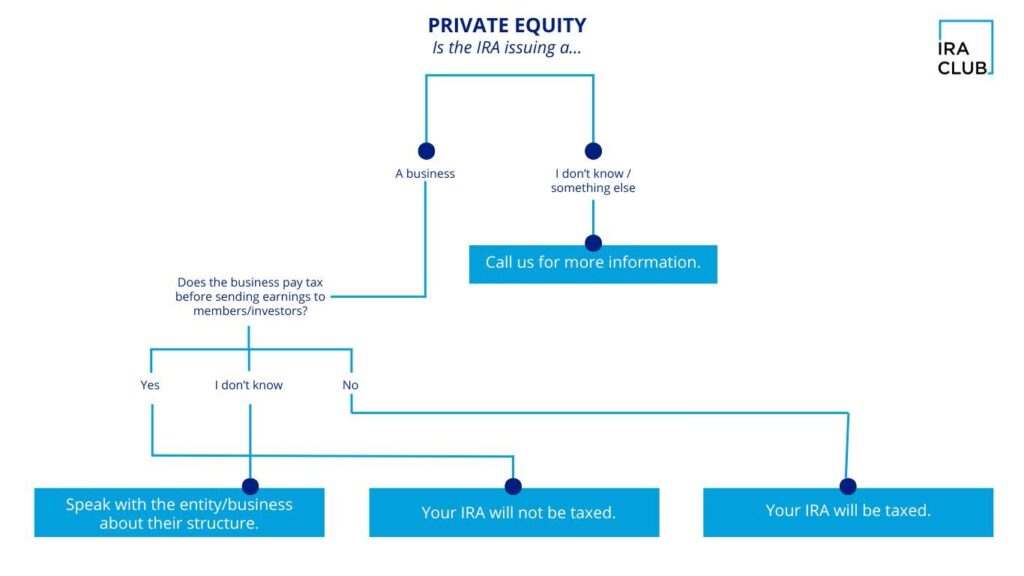
An IRA partnership structure allows a Self-Directed IRA (SDIRA) to participate in real estate investments alongside other investors. In this setup, the SDIRA contributes capital to an entity—such as an LLC or limited partnership—that then acquires and manages the property. This structure may allow participation in real estate projects that require pooled capital.
Partnership arrangements must follow the same IRS rules that apply to other SDIRA investments. The partnership interest must be titled in the name of the IRA, supported by a qualified IRA custodian, and compliant with Internal Revenue Code §408 and §4975. These rules govern prohibited transactions, disqualified persons, valuation requirements, documentation, and how income and expenses must flow into and out of the IRA.
A qualified IRA custodian or administrator holds legal title to the SDIRA’s partnership interest, maintains records, and handles required IRS reporting.
Takeaway:
An IRA partnership allows an SDIRA to hold a partnership interest in real estate through a pooled ownership structure. Understanding custodial duties, administrative roles, and IRS requirements provides clarity on how these arrangements function within an IRS-regulated retirement account.
Prohibited transactions are activities restricted under Internal Revenue Code §408 and §4975 between a Self-Directed IRA (SDIRA) and certain “disqualified persons.” These rules are designed to prevent self-dealing and to ensure IRA assets are not used for personal benefit. Disqualified persons include the account holder, their spouse, lineal ascendants and descendants, and entities they control, manage, or are highly compensated by.
In a real estate partnership, a prohibited transaction can occur if a disqualified person sells property to the IRA, purchases property from it, provides paid services to the IRA-owned investment, or receives any personal benefit from the IRA’s assets. The account holder and family members also cannot use the property, either directly or indirectly. Any transaction or involvement that results in personal benefit to a disqualified person must be avoided to maintain the IRA’s tax advantages.
If a prohibited transaction occurs, the IRS may treat the IRA as fully distributed on the first day of the taxable year in which the transaction took place. This can eliminate the account’s tax-advantaged status and may result in additional taxes or penalties. A qualified IRA custodian manages the IRA that holds legal title to IRA assets at the discretion of the IRA owner and manages required reporting.
Takeaway:
Prohibited transactions involve interactions between an SDIRA and disqualified persons that provide direct or indirect personal benefit. Understanding these rules is essential for keeping real estate partnership investments compliant with IRS requirements.